
탈-trilogy: {1} 탈-dissociation, {2} imiji パフューム 메이킹, {3} Do VOCALOIDs dream of meadowland?, 2026
︎︎︎︎︎
performance {1} / collaboration {2,3} Yooha Cheon
performance {3} Jozef Jie Sheng Chua & Léa Valéry
composition {2,3} Doukus & {3} Dong Zhou
tech {3} Lengleng
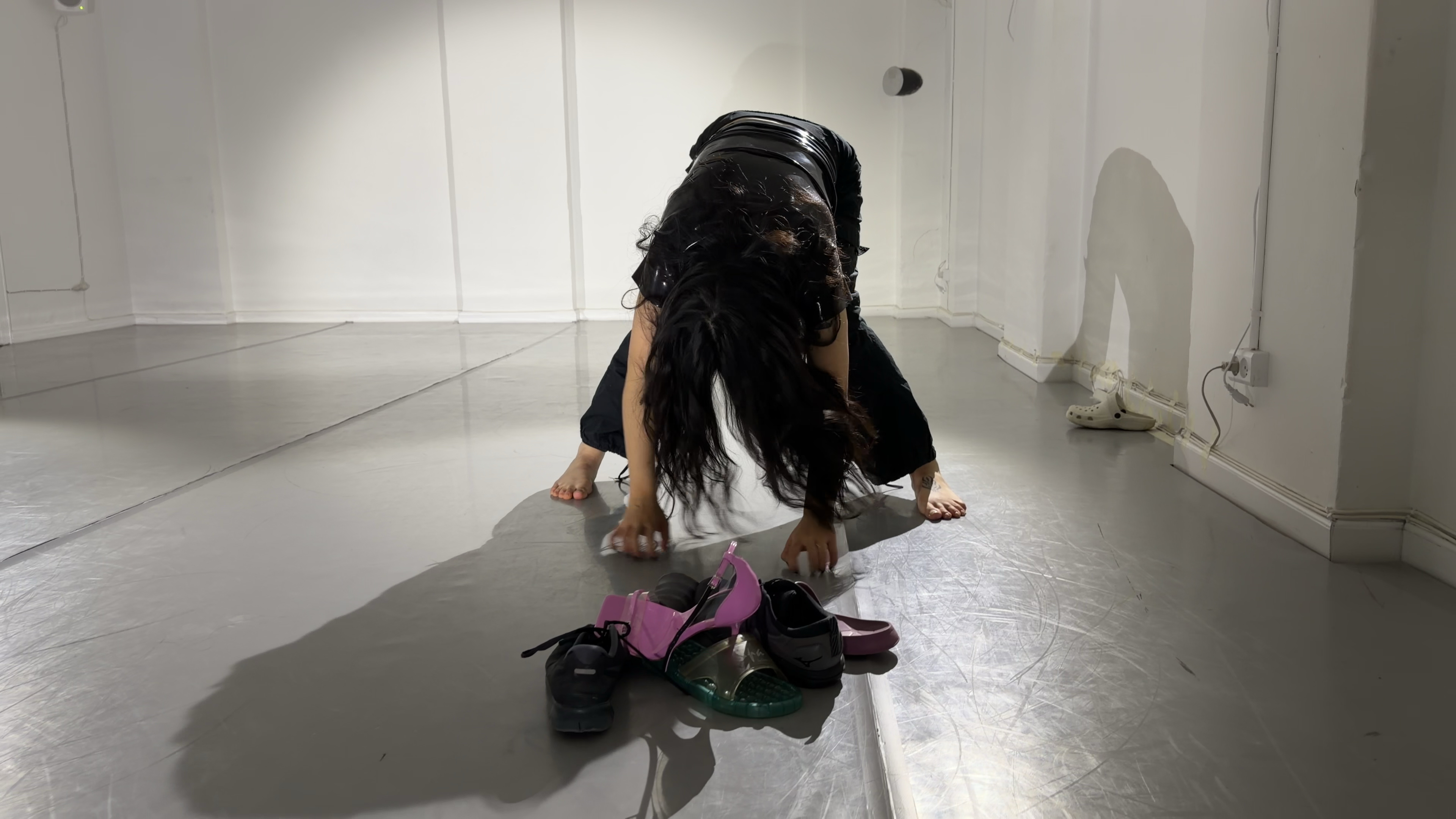
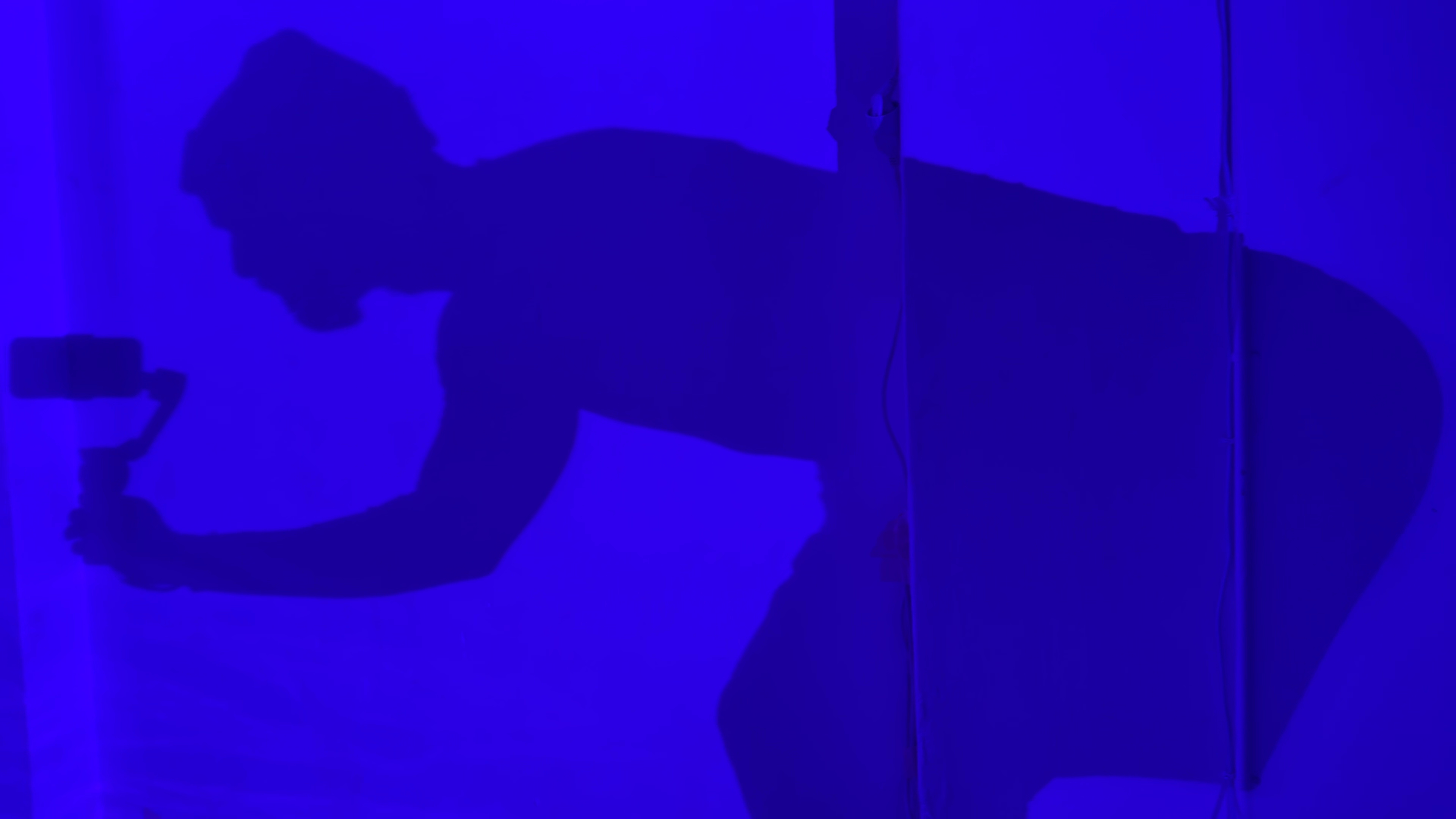
various decoupled shoes, latex dress shirt, blue-indigo light, business cosplay, VOCALOID character wigs, artificial snow, cursed school-chair, sweatshirt sleeves, (non)edible flowers
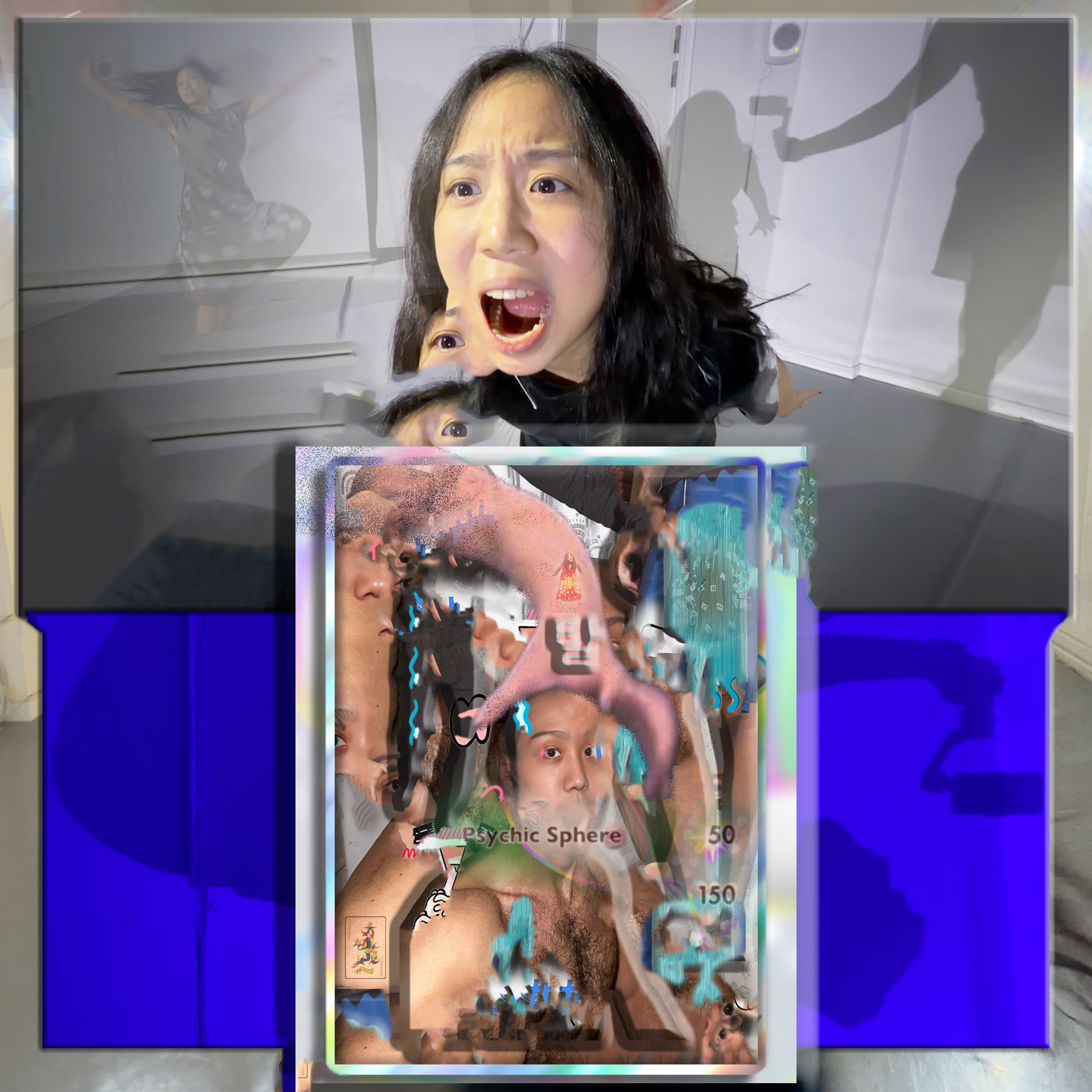


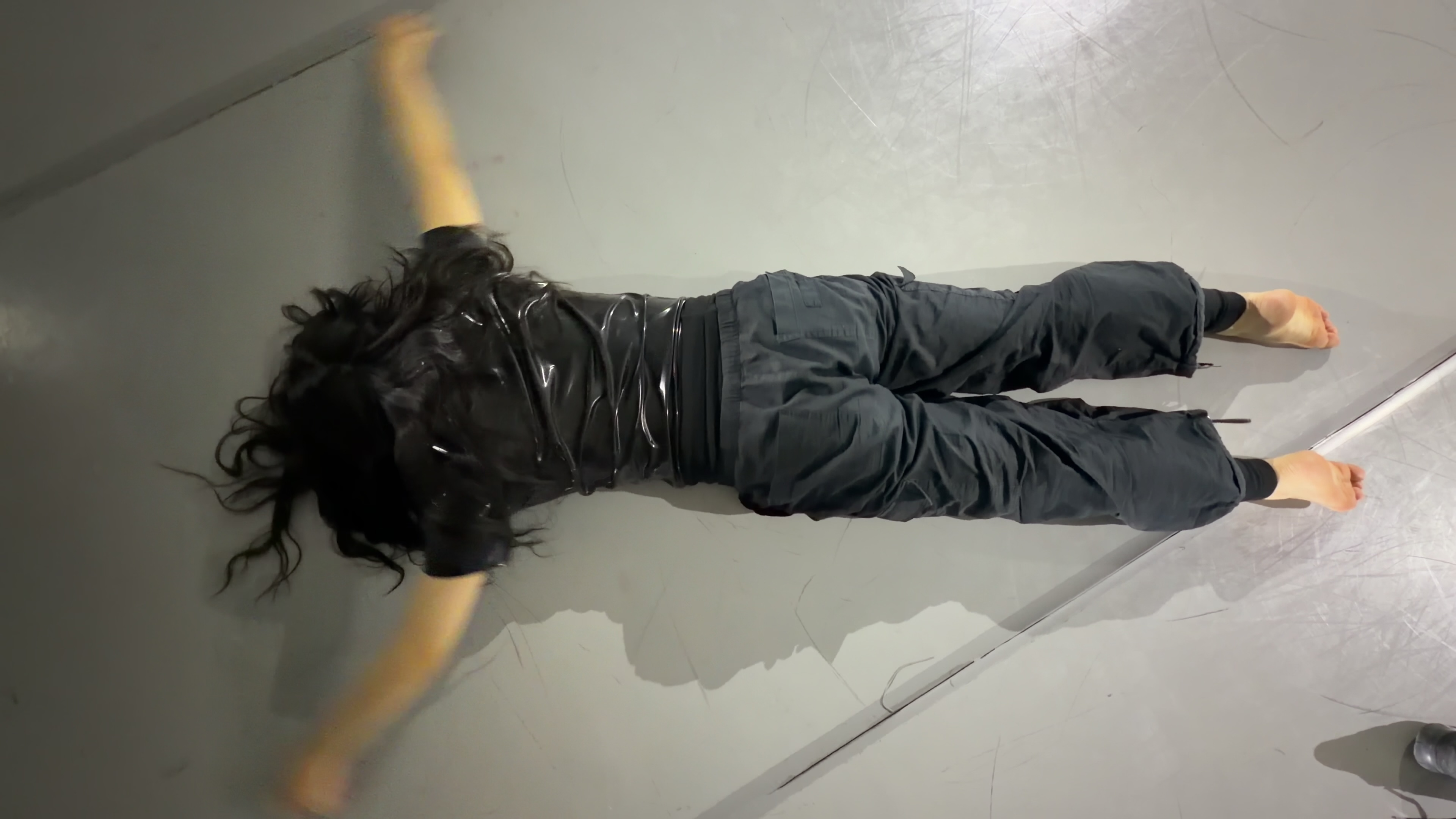
{1} “De-dissociation” (탈*-dissociation) traces the psychic and sensorimotor textures of a body performed by and developed in collaboration with Yooha Cheon’s (전유하) spiritual/psychic relations to birthplace (서울/Seoul). Questioned are postcolonial and post-DMZ (Korean Demilitarized Zone) cultural phenomena which complicate notions of origin and psychological categorization/diagnosis in globalized techno-culture amidst rippling wakes of empire (Japanese, United States). A series of solo dance scenes responds by negotiating an “East-West dichotomy” with cyborgic and spiritual overlay, unfolding a choreography of corporeality and its possessions vs. decompositions. The performance researches dissociation not as psychiatric DSM (Diagnostic and Statistical Manual of Mental Disorders) pathology/retreat but as a site of wonky attunement amidst aesthetic contours and atmospheres of “Gen Z” joy or horror.
*Depending on the context, 탈 translates to “mask” or acts as a prefix for “escape/removal.”
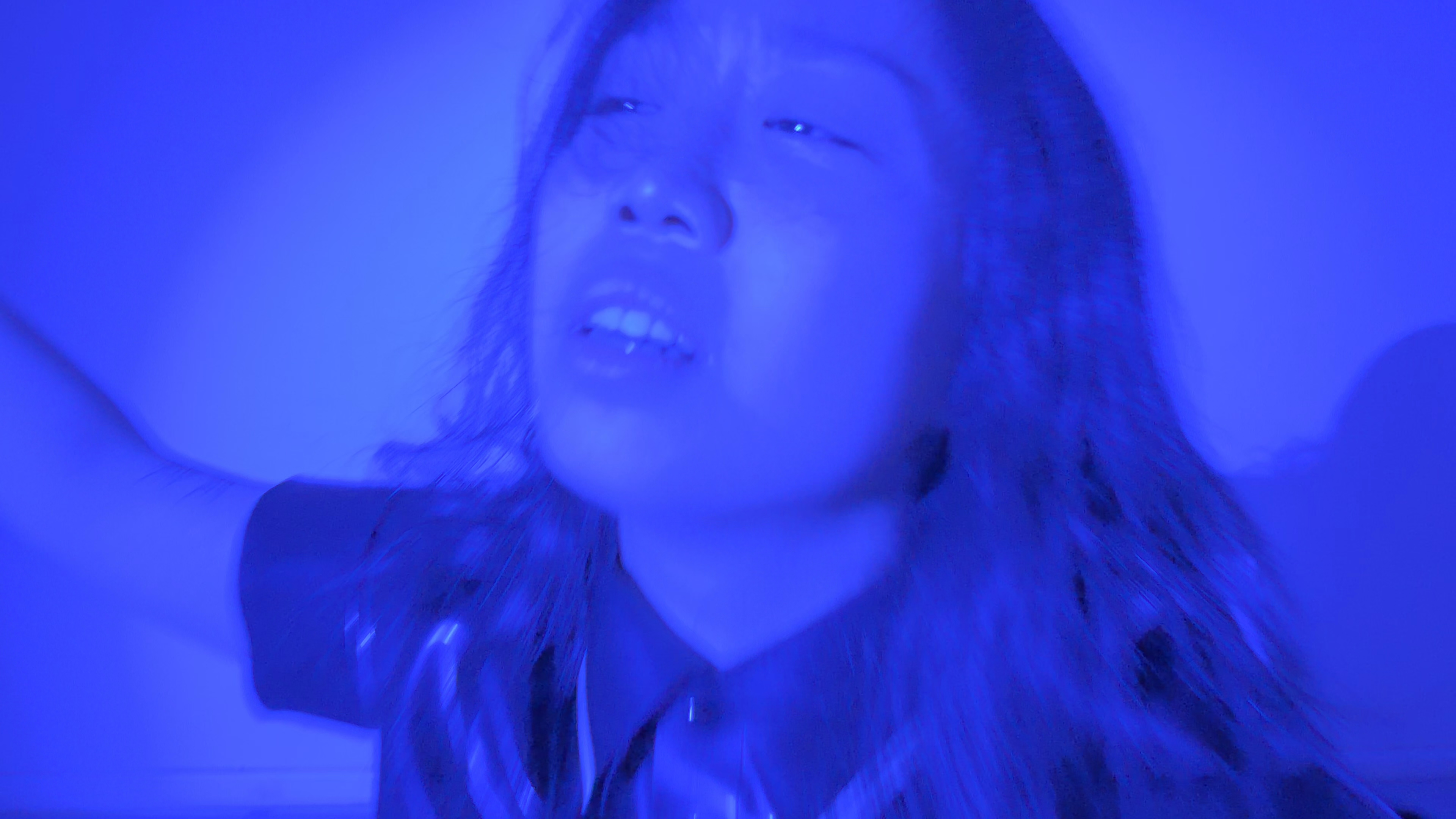
{2} "image perfume making" is an intergenerational render of and by Yooha Cheon and Zander Porter, exploring cross²-cosplay unbecoming and study of hyperpop-pioneering sounds and their place in time (~2006, Facebook) before technological domination by, e.g., businessmen of Silicon Valley. A shared (operating) system is performed and destabilized through both fusion and fission of Yooha and Zander’s bodies-as-holograms.
Through protocolized gesture, the performance sources vulnerabilities from a historically loaded U.S.–Japan–Korea loop and its implications for late-exorbitant cultural consumption. Depression and social withdrawal are articulated via somber techno-aesthetics, including (AI) software predecessors like VOCALOID. imiji パフューム 메이킹 examines some qualities of this psycho-cultural loop with disidentificatory potential, replete with worlds of direct impact and lightness. The performance is upgraded as version 2.0 for its East Asian re-premiere in Yokohama.
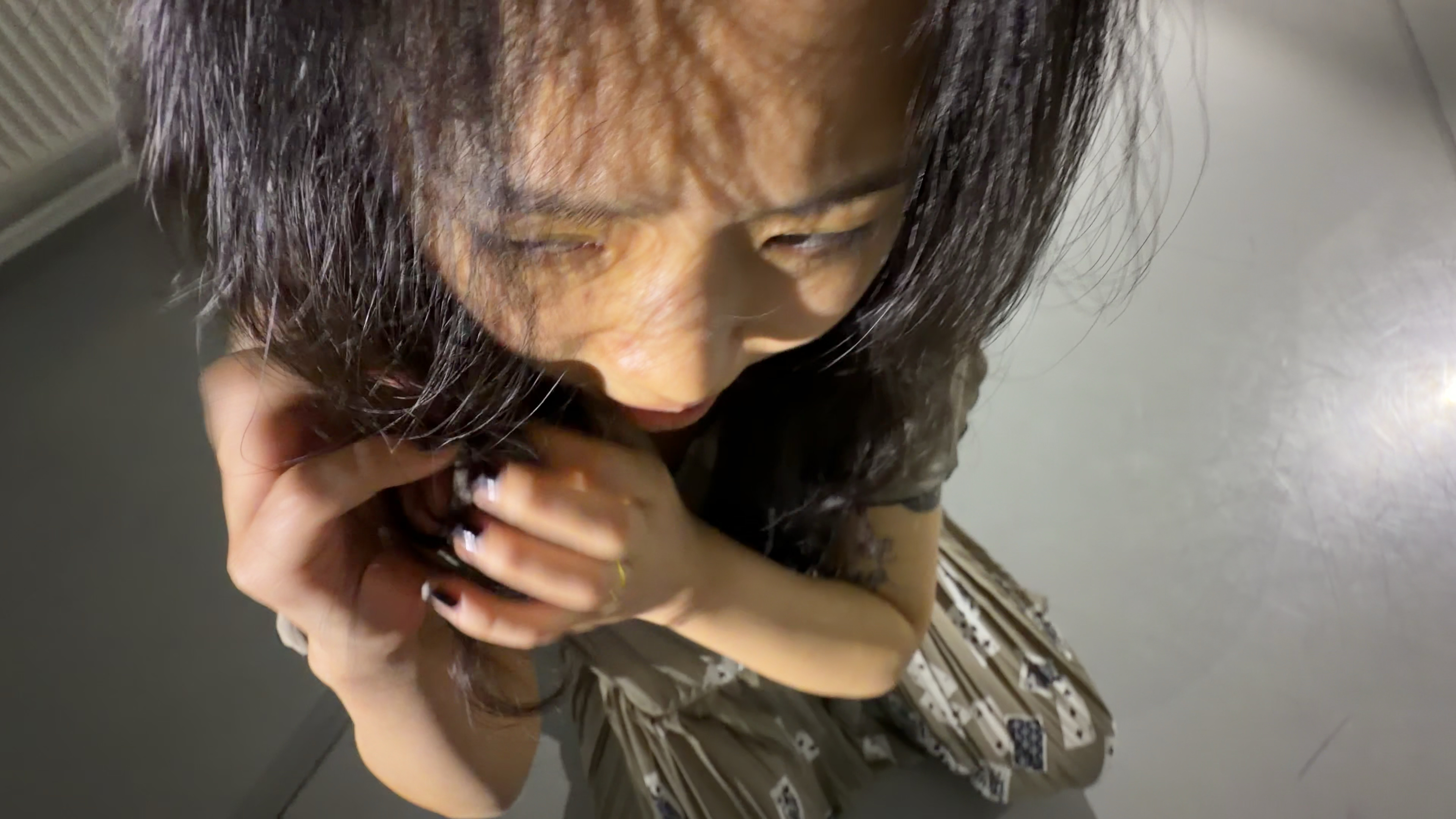
{3} Do VOCALOIDs* dream of meadowland (꽃밭 [flower-field])? hosts the audience in a screensaver-reality to observe four next-gen vocal androids. They wonder: does personal desire exist outside of psychosocial pressure and projection? In the performance, this team of grumbling e-friends reimagines the spirit of source code — supported by four vulnerable yet immortal animations. They together unfold a story of impossibility and tranquility. The performance traces boundaries of time, body, voice, and self, reincarnating and blurring them. It asks how intimacy with practices and histories of 무속 (Musok, "Korean shamanism") may support ceremonies of questioning identity across ethnocultural inheritance. The work is the third and final of this trilogy of performances that centers and traces connections between dissociation (1), depression (2), and hallucination (3).
*VOCALOID™ was originally codenamed DAISYプロジェクト ("Daisy Project"), referencing "Daisy Bell (Bicycle Built for Two)" (1982), the earliest song sung using computer speech synthesis by the IBM 7090 ("second-generation computer") in 1961. It is now widely related to the trope of malfunctioning AI regressing to its first memory (the first song it was taught), a similar sentiment to the connection drawn from AI generating false claims and fabricated data to hallucination (“wandering of the mind”).
“The performance creates a strong atmosphere: gloomy, mysterious, and suspended. The empty black box looks like a hostile home, inhabited by figures who appear almost like digital zombies, coming either from a macabre future or from a past that does not want to rest. Post-humans or more-than-humans? Their costumes and images combine many references: long sleeves that might evoke kimonos, bright wigs of VOCALOID singers that recall anime aesthetics, and blackened teeth that open another set of cultural and visual associations. Even when all references are not fully readable, [—] the figures work well as unstable image-bodies, caught between traditions, projections, and dystopic futures.”
— Ana Vujanović, PhD, Inter-University Centre for Dance Berlin & School for New Dance Development
This black-box dance-theater trilogy emerged after three years of personal advising/mentorship of 유하 (Yooha) for all semesters of study and coursework at School for New Dance Development (2022-2026). The first performance’s initiation and rehearsal in 2025 were supported in Berlin by Erasmus+, Academy of Theatre and Dance, & Theaterhaus Berlin and a residency/showing occurred at DANSEatelier (special thanks to Snorre Elvin) with additional support from Dansehallerne (Copenhagen). The second and third works were respectively co-produced by Frascati and Flemish Cultural Center de Brakke Grond (documentation images © Gergely László Ofner and special thanks to Ariadne Sergoulopoulou, Jonny Mehrez, & Maarten Bijnen). Choreographic guidance for Do VOCALOIDs dream...? was supported in Berlin by Melissa Minseong Seo. 탈-dissociation has its institutional black-box premiere at Fringe Club (Hong Kong) in 2027. imiji パフューム 메이킹 is restaged for SNDO graduation works at Uferstudios / HZT (Berlin University of the Arts) with technical support from Maxim Gorki Theater and re-premiered in East Asia at WAKABACHO WHARF for YPAM Fringe (Yokohama) in 2027, supported by the Embassy of the Kingdom of the Netherlands in Japan.


»Desktop